


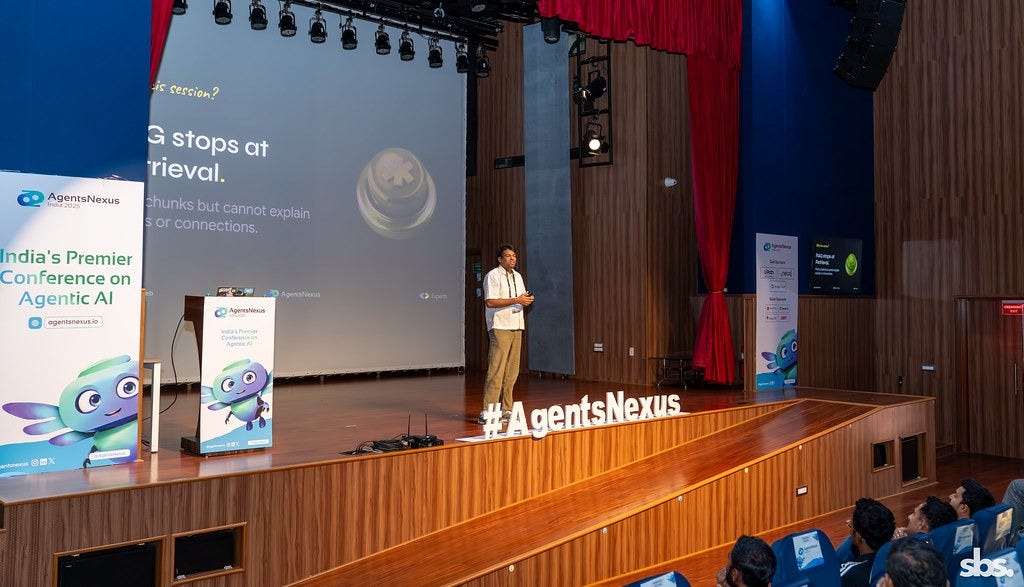
Last month, I had the incredible opportunity to speak at AgentsNexus India 2025, India’s premier conference on Agentic AI.
As I stepped into the vibrant venue at Samarthanam Auditorium in HSR Layout, Bengaluru, I could feel the electric energy of 300+ developers, researchers, and AI builders who had gathered to explore the future of intelligent agents.
AgentsNexus 2025 wasn’t just another tech conference, it was a convergence of minds shaping the next wave of AI innovation.
The event brought together an impressive lineup of speakers from tech giants like Google, Microsoft, Docker, UiPath, and Neo4j, alongside pioneering startups and research institutions.
The conference promised three key experiences that delivered in full
Discover
Deep-diving into frameworks, tools, and workflows making software truly intelligent.
Experience
Live demos and interactive showcases putting Agentic AI at our fingertips.
Connect
Building relationships within India’s burgeoning AI agent community.
What struck me immediately was the palpable excitement around Agentic AI, not just as a concept, but as a practical reality that’s transforming how we build and deploy intelligent systems.
My Session
Make Your AI Think - Adding a Reasoning Layer to Your RAG Stack with Neo4j
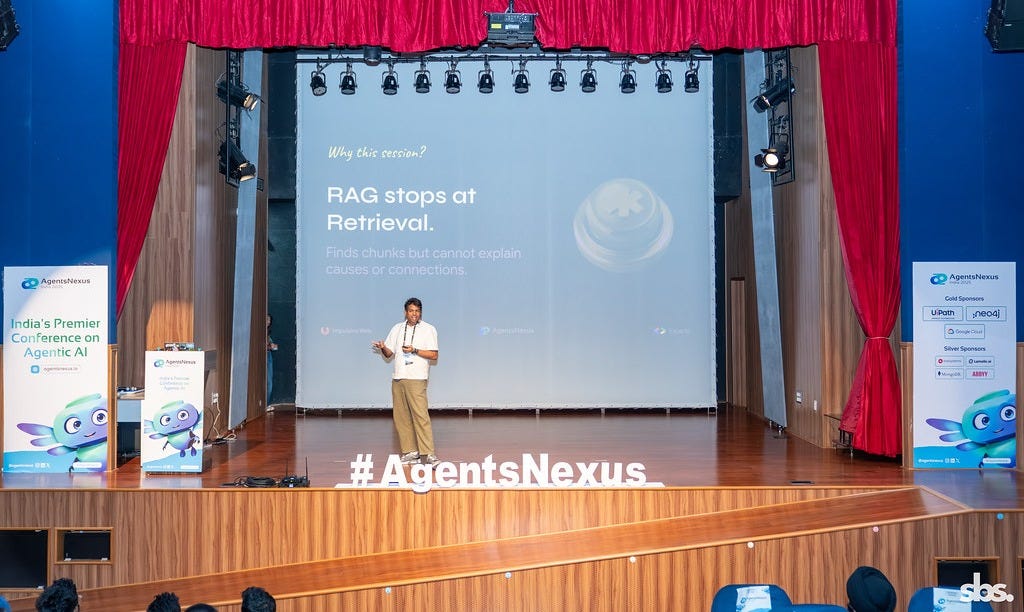
Walking onto the stage, I could see the anticipation in the audience’s eyes. Having attended numerous AI conferences, I knew this crowd wasn’t looking for surface-level discussions. They wanted depth, practical insights, and real-world applications.
That’s exactly what I aimed to deliver.
The Challenge
When Retrieval Isn’t Enough
I opened my talk with a fundamental question that many AI teams grapple with, Why do our RAG systems often fall short of true intelligence?
The answer lies in the traditional RAG pipeline’s limitation, it stops at fetching data. But intelligence demands more than retrieval, it requires reasoning. It needs to connect dots, trace relationships, and draw meaningful inferences from complex data landscapes.
The Solution
Graph-Powered Reasoning using Neo4j
I shared how we’ve been transforming RAG pipelines by layering in Neo4j as a reasoning graph.
The approach fundamentally shifts from the traditional Retrieve → Generate paradigm to a more sophisticated Retrieve → Reason → Generate workflow.
Graph-Based Entity Modeling
By representing entities and their relationships as nodes and edges, we create a rich semantic landscape that mirrors real-world complexity.
This isn’t just about storing data, it’s about capturing the intricate web of connections that give data meaning.
Cypher Query Traversal
I demonstrated how Cypher queries enable sophisticated knowledge path traversal, allowing us to uncover hidden relationships and context that traditional retrieval methods miss.
The audience was particularly engaged when I showed how a simple traversal query could reveal multi-hop relationships across seemingly disconnected data points.
Structured Context Injection
Rather than feeding raw retrieved documents to LLMs, we preprocess graph-extracted insights into structured context.
This dramatically improves answer quality by providing the LLM with pre-reasoned, relationship-rich information.
End-to-End Architecture Patterns
I walked through production-ready code patterns showing how to implement this approach at scale, including handling real-time updates, managing graph consistency, and optimizing query performance.
The Audience Reaction
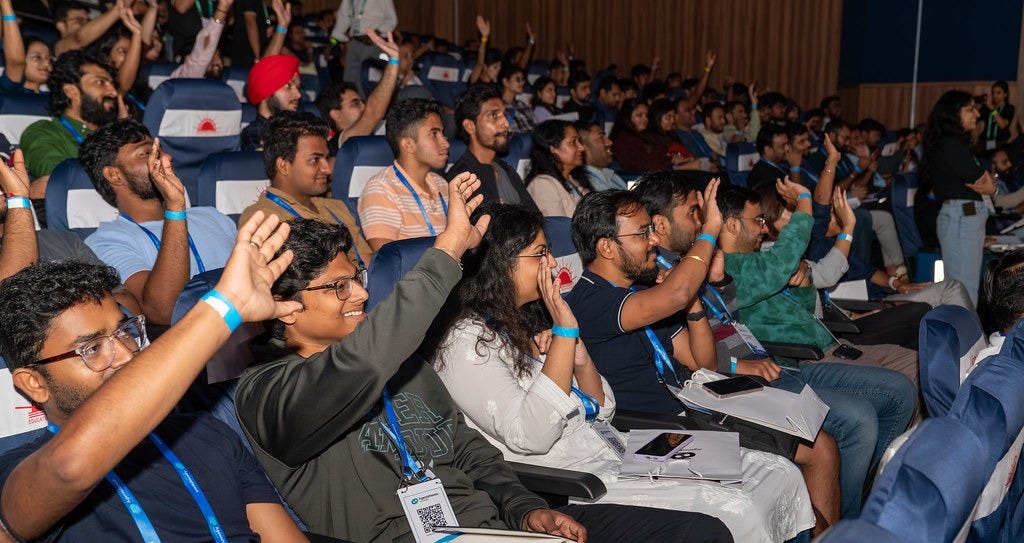
The response was overwhelming. During the Q&A session, hands shot up immediately. Questions ranged from handling dynamic graph updates to managing computational overhead in large-scale deployments.
One attendee asked about handling multiple data types such as images, pdfs, documents, XLS sheets etc, a question that led to an engaging discussion about hybrid and multi-model ingestion pipeline.
In my session, I explored how to move Retrieval-Augmented Generation (RAG) beyond simple data retrieval to genuine understanding. Most RAG systems are great at fetching information but lack reasoning, the ability to connect ideas and draw logical conclusions.
What resonated most was output, where I showed a before-and-after comparison, a simple question asked to a standard RAG system versus our graph-enhanced version answering the same.
The difference in answer quality and depth was striking, earning an audible reaction from the audience.
The Event Experience
AgentsNexus 2025 was more than presentations, it was a celebration of India’s AI community.
The energy was infectious, from the morning registration to the evening end note, everything was laid down exceptionally well.
We have had some fascinating conversation in the Green Room with fellow speakers
Aman Sharma founded Lamatic AI and talked about the concept of Software 3.0 which was to enable Agents in SaaS.
Abhijeet Jha helping to build the last piece of software from idea to product at Lovable
Prashanth Subrahmanyam from Google who traced the journey from foundational models to autonomous systems.
Ajeet Singh Raina from Docker who brilliantly articulated why “agents are the new microservices”
Abhishek Kumar from Publicis Sapient, who demonstrated how reinforcement learning creates resilient enterprise agents
The “Beyond the Sandbox: AI Agents in Production” panel sparked intense discussions about real-world deployment challenges. Udit Jain from UiPath, Santhosh Kumar from Walmart, and Blessy Varghese from ABBYY shared war stories that had the audience nodding in recognition.
Ashith Shankar from Siemens Healthineers presented perhaps the most impactful session on Agentic AI in Healthcare. Seeing how these technologies could literally save lives added a profound dimension to our technical discussions.
The “Guardrails for Agentic AI: Security and Sovereignty” panel tackled the elephant in the room, how do we build trustworthy autonomous systems? The insights from Saurabh Karn of Sarvam AI and Tanmaiyee Vadloori of Progress Software were particularly enlightening.
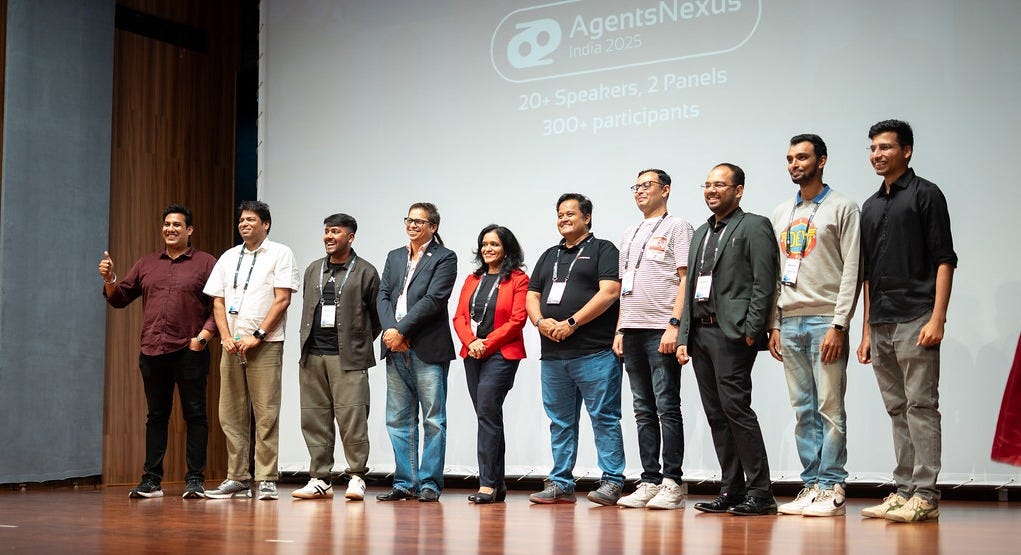
I think I am getting a little carried away with the details but the energy was such that I cannot resist.
The Human Side of Tech
What truly set AgentsNexus apart was the attention to community building. The lunch breaks weren’t just about food (though the cabbage curry deserved its own fan club!), they were incubators for collaboration.
I witnessed discussions forming in various unnamed groups, speakers and panelist are surrounded by curious audiences.
In the evening coffee break I was in talks with some folks from LinkedIn to help them how they can think and plan to enable AI in their specific projects and modules. I don’t really know how much help my suggestions brought to them, love to hear back.
Key Takeaways from the Event
Multi-LLM Architectures Are Here
Multiple speakers emphasized that the future isn’t about one massive LLM but orchestrated networks of specialized agents.
Graph Technologies Are Critical
From my Neo4j presentation to Abhishek Das’s talk on GraphRAG, it was clear that graph databases are becoming essential infrastructure for intelligent systems.
Production Readiness Is Paramount
The community has moved beyond proof-of-concepts to demanding production-ready, scalable solutions.
Healthcare AI Is Accelerating
The applications presented in medical imaging, drug discovery, and patient care were revolutionary.
Enterprise Adoption Is Real
Companies aren’t just experimenting, they’re deploying agentic systems at scale.
Indian AI Ecosystem Is Thriving
The quality of innovation and entrepreneurship on display was world-class.
The conference crystallized several directions for our field
Orchestration frameworks will become as important as the agents themselves
Security and governance can’t be afterthoughts – they must be designed in from the start
Human-in-the-loop systems will remain crucial for high-stakes applications
Cost optimization will drive architectural decisions as deployments scale
Gratitude and Special Thanks
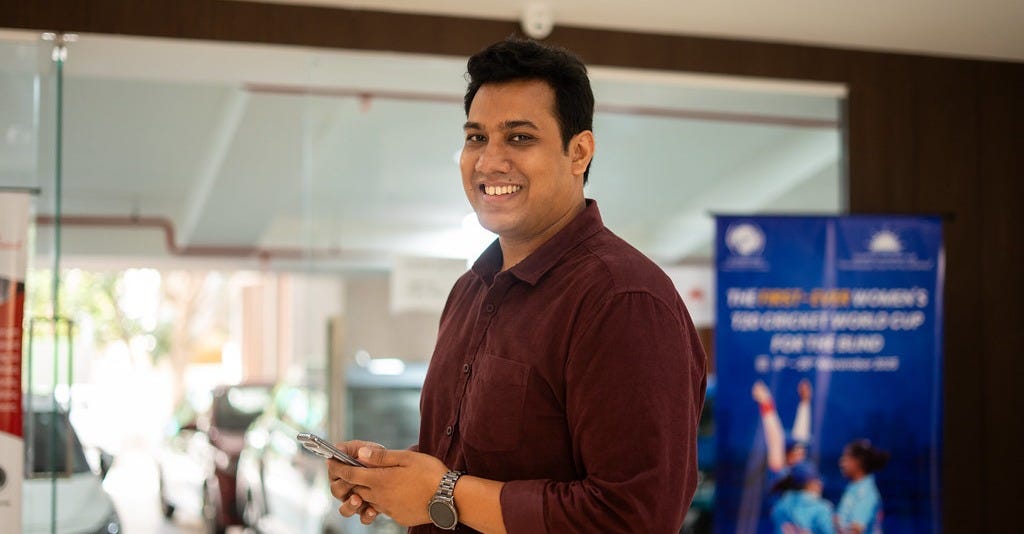
At the last, I must express my heartfelt gratitude to Siddhant Agarwal and the entire AgentsNexus organizing team to bring together such a diverse, high-caliber group of speakers and attendees is no small feat.
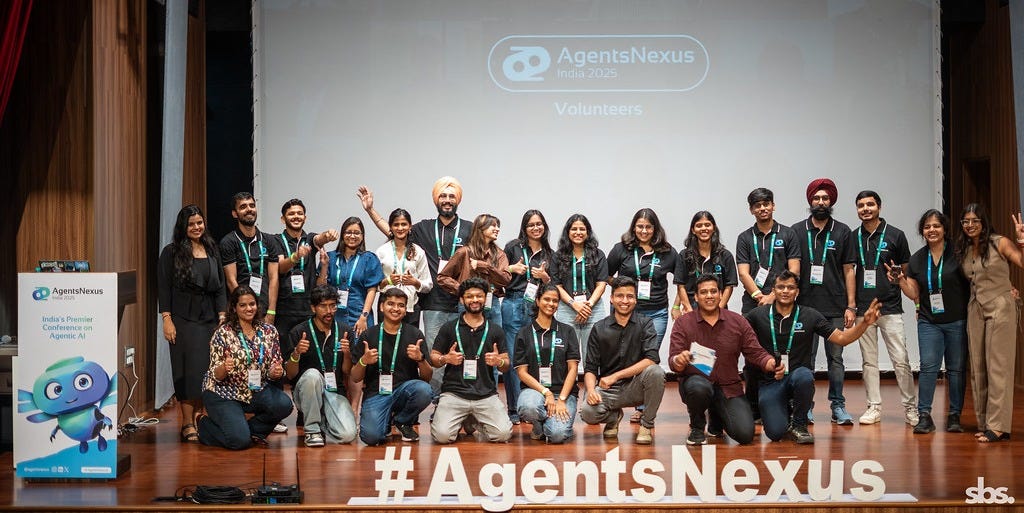
The volunteer team, managed the complex logistics with grace. From coordinating speaker schedules to ensuring smooth transitions between sessions, their efforts were invisible to attendees but invaluable to the event’s success.
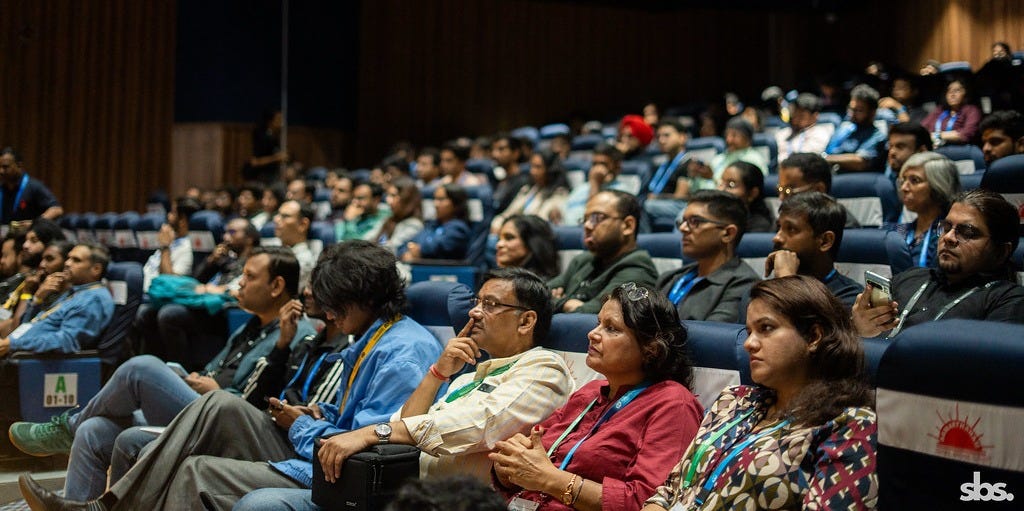
To everyone who attended my session, thank you for your engaged questions, thoughtful feedback, and continued conversations after the talk. Your enthusiasm validates that the shift toward reasoning-enhanced AI systems isn’t just a technical necessity but a community imperative.
AgentsNexus 2025 wasn’t an endpoint, it was a launchpad. The connections made, ideas shared, and collaborations sparked will ripple through our community for months to come.
The future of AI isn’t just about bigger models or more data, it’s about building systems that can reason, learn, and adapt like the intelligent agents we envision.
Events like AgentsNexus remind us that we’re not building this future alone but as part of a vibrant, collaborative community.