


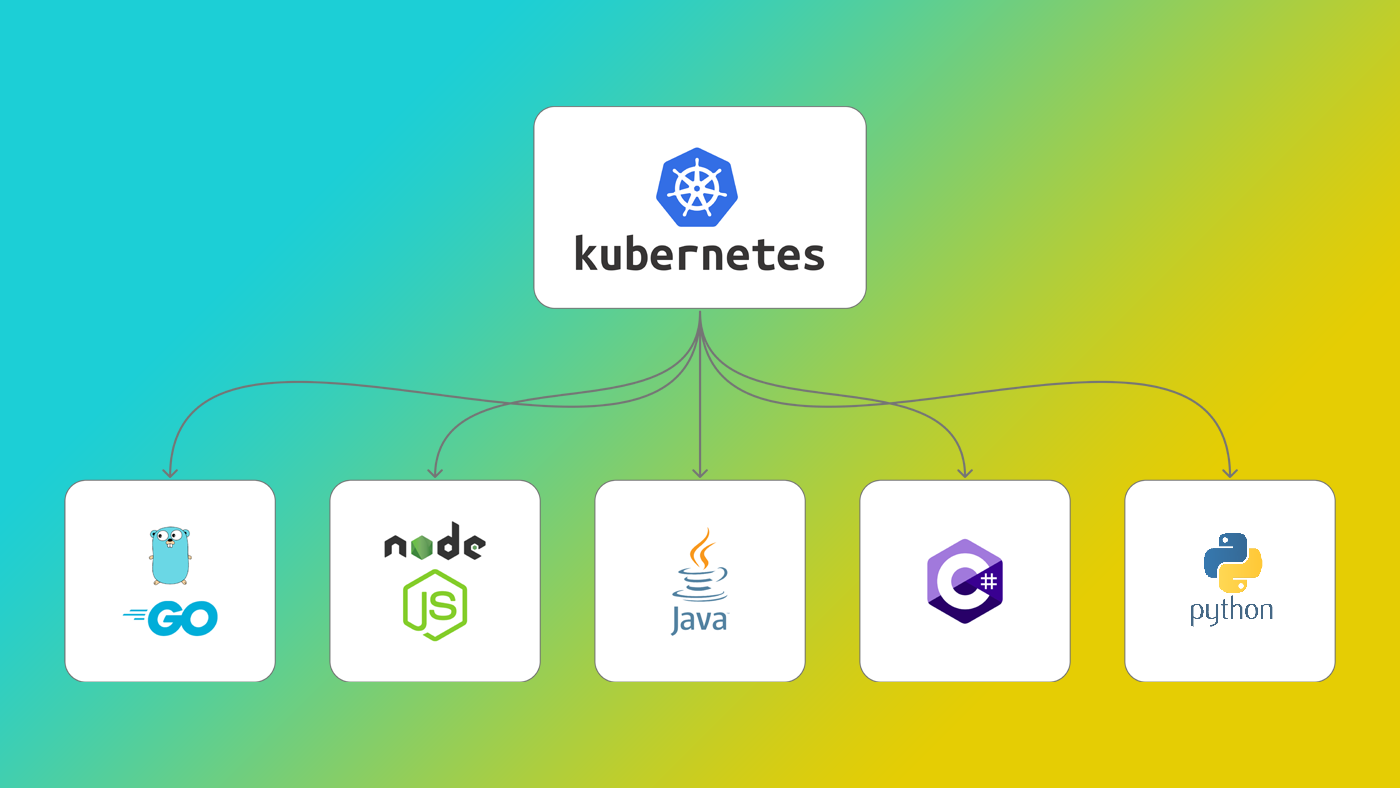
Last month I was called into a war room for a high growth fintech client. They were running fifty microservices across five different engineering teams. Like many modern organizations they had no language mandate. Each team chose the tool they knew best.
The checkout team used Node.js. The inventory team used C#. The payments team used Java. The recommendations team used Python. The platform team used Go.
Everything worked perfectly until their first major promotional event.
When the traffic hit 180,000 requests per second the Go and Node.js services scaled in seconds. But the payments and recommendations services stayed in a pending state for nearly a minute.
The checkout requests were succeeding but they were hitting a wall of timeouts from the downstream inventory and payment services. From the perspective of the user the app was dead.
The CFO asked me why they were paying millions in AWS bills for a system that still crashed under load. I spent forty eight hours benchmarking their exact infrastructure to find the answer. We found that language choice is not a developer preference. It is a physical infrastructure variable with a massive price tag.
The Environment
I have executed this benchmark in a standard Kubernetes cluster on AWS. Every service was tested using the same traffic pattern reaching 180,000 requests per second. We used c7g.xlarge instances powered by Graviton processors.
We measured image pull times through a 100 Mbps network bottleneck to simulate real world regional data center congestion.
We must look at the raw data across all five environments to understand the financial impact.
Go with Fiber
Image Size:
24MBImage Pull Time:
1.2 secondsMemory per pod (Idle):
8MBPod count on peak load:
12Cost per month:
$631 USD
NodeJs with Fastify
Image Size:
80MBImage Pull Time:
2.5 secondsMemory per pod (Idle):
45MBPod count on peak load:
15Cost per month:
$788 USD
C# with ASP.NET Core
Image Size:
250MBImage Pull Time:
8.7 secondsMemory per pod (Idle):
95MBPod count on peak load):
18Cost per month:
$946 USD
Java with Spring Boot
Image Size:
180MBImage Pull Time:
5.8 secondsMemory per pod (Idle):
120MBPod count on peak load):
22Cost per month:
$1,157 USD
Python with FastAPI
Image Size:
300MBImage Pull Time:
10.2 secondsMemory per pod (Idle):
85MBPod count on peak load):
35Cost per month:
$1,840 USD
The HPA Bottleneck
Why container image size is a first order variable for reliability? When the Horizontal Pod Autoscaler or HPA triggers a scale event it creates a series of physical hardware demands.
The first demand is network I/O. Your container registry has a bandwidth limit. Your Kubernetes node has a network interface limit. A 300MB Python image is not just a little larger than a 24MB Go image. It is twelve times larger.
The second demand is disk I/O. Once the image is pulled the container runtime must extract the layers. A 300MB compressed Python image often unpacks to 800MB of data on the disk. This extraction is a serial process that is heavily CPU and I/O bound.
Look at the math of a traffic spike.
If your traffic doubles in 30 seconds and your Go pods take 2 seconds to become ready you can catch the load.
If your Python pods take 10.2 seconds to pull plus 4 seconds to start the interpreter you have a 14 second gap where you are dropping requests.
By the time the Python pods are ready the existing pods have already crashed from CPU saturation. This is the Cold Start Death Spiral.
The Garbage Collection cost
We must look deeper than raw compute to see the actual cost of running these languages at scale. The most hidden expense in a Kubernetes cluster is the cost of Garbage Collection.
In a managed runtime like Java or Node.js the system must periodically pause execution to clean up unused memory. This is the Stop The World event. I found that as the request rate increases the volume of temporary objects created on the heap explodes.
In the Java Spring Boot service the Garbage Collector consumed twenty percent of the total CPU cycles during peak load. This means you are paying for five pods just to run the cleaning service for the other twenty.
Furthermore these pauses create massive spikes in tail latency. When the collector triggers every active request in that pod is paused. Your ninety ninth percentile latency is dictated by the memory cleaner and not your code
Go avoids this through a different physical strategy. It uses a concurrent mark and sweep collector designed for low latency. The pauses are measured in microseconds and not milliseconds. This allow Go to maintain a flat latency profile even as you approach the physical limits of the CPU.
The Database connections
I discovered a hidden cost that most architects completely miss, the ceiling of connection pool.
Our benchmark showed that C# opened 450 database connections at peak load. Go opened only 180 connections. This is not just a performance detail. It is a hard infrastructure limit.
A standard AWS RDS db.t3.medium instance caps at 420 connections. If you run the C# stack and scale to 50 pods you will hit the max_connections limit of your database.
New pods will fail to connect and they will fail their health checks. The HPA will keep trying to scale but the database will refuse the traffic.
To fix this with C# you are forced to upgrade to a db.r5.large instance. That upgrade costs $438 USD more per month. You are paying a 150 percent premium for your database just because your language has inefficient connection management. Go handles the exact same load on the cheaper instance with 43 percent of the connection limit remaining.
The full economic model
Let’s evaluate the total annual cost of ownership for a sustained workload of 180,000 requests per second.
Annual cost for each language
Go:
$7,572 USDNodeJs:
$9,456 USDJava:
$13,884 USDPython:
$22,080 USD
Python costs $14,508 USD more per year than Go to run the exact same workload. When you factor in the forced database upgrades and the registry bandwidth charges the delta grows to over $20,000 USD per microservice.
If you have 50 microservices you are paying a 1 million dollar annual cost for your language choices.
Now, let’s evaluate these findings against the reality of developer productivity.
On one hand we see that Go is the undisputed king of infrastructure economics. It is the only language designed for the physical constraints of a containerized world. It ignores the legacy of heavy runtimes and focuses purely on memory bandwidth and binary size.
On the other hand we must acknowledge the hiring market. Finding ten expert Go engineers is significantly harder than finding ten Python or Java developers. We must analyze if the $14,000 USD savings per year is worth the $50,000 USD difference in senior engineering salaries.
However for high scale startups and enterprise gateways the math is clear. You can buy a lot of senior engineering time for 1 million dollars in annual cloud savings.
Conclusion
After analyzing the image pull physics the connection pool ceilings and the annual compute deltas we reach a definitive conclusion.
Stop choosing languages based on what is popular on social media. You must start choosing based on the cost per million requests.
If your workload has spiky traffic and you run in Kubernetes you should use Go or Node.js. The fast scale up times will prevent outages that cost far more than your cloud bill.
If you are a banking or enterprise shop that requires Java or C# then you must budget for a 50 percent infrastructure premium. You must also over provision your databases to handle the connection bloat.
If for some reason using Python is the only choice you have, be prepare for that 300% infrastructure cost to handle the spiked traffic.
Your language choice has a monthly price tag. It is a line item on your AWS bill.
Choose accordingly.