


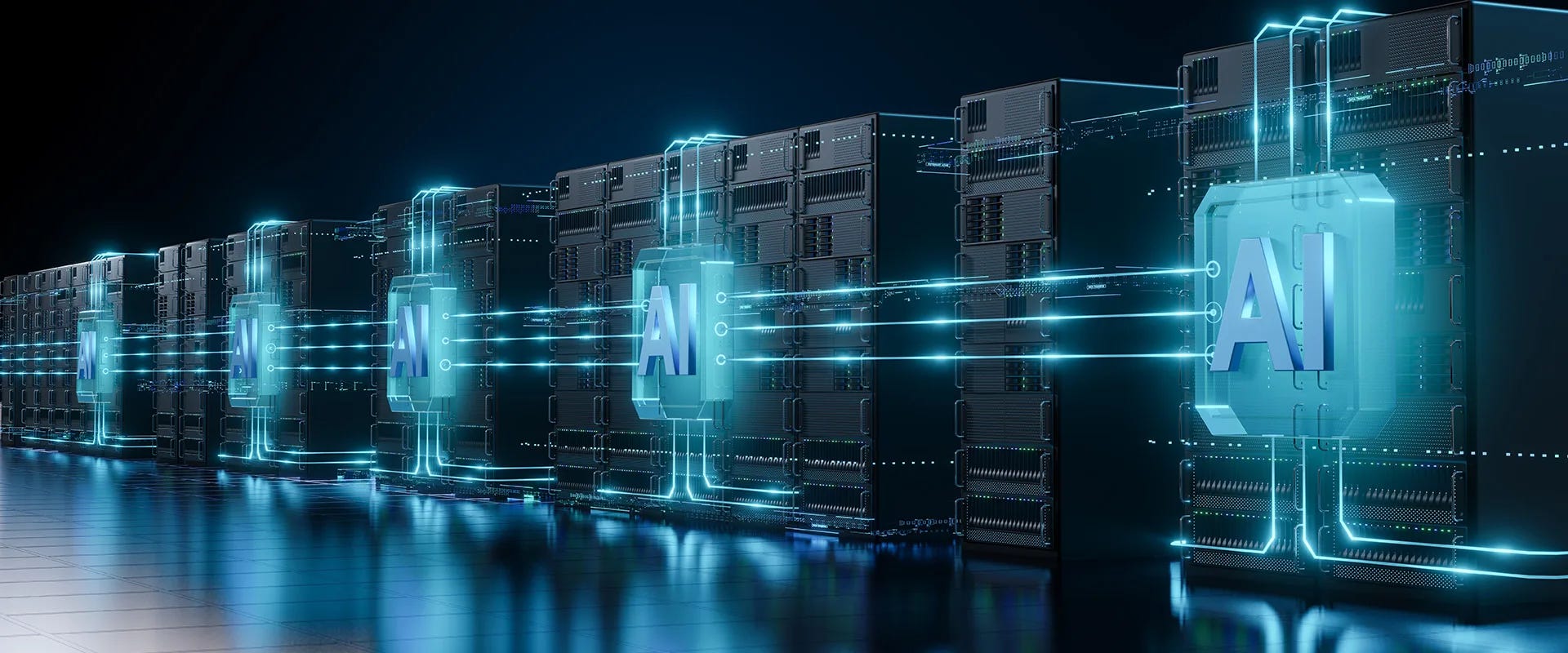
For a decade we were told owning physical servers was a relic of the past. The public cloud was the final destination.
We must critically analyze this assumption today in April 2026.
The generative AI boom is aggressively reversing that trend. The companies building frontier AI are quietly abandoning generic public cloud infrastructure.
They are pouring hundreds of billions into custom physical data centers.
Let us examine the evidence to prove this shift.
Look at Microsoft and OpenAI. They are planning Project Stargate. This is a proposed 500 billion dollar supercomputer data center. We must critically analyze that number. It is five hundred times more expensive than current massive data centers.
Look at Meta. They are bypassing standard cloud providers entirely. They are hoarding hundreds of thousands of H100 GPUs in custom built facilities. They are designing the cooling and power routing from scratch.
Google has always relied on its own custom TPU pods rather than generic cloud hardware for its core AI research.
The takeaway is clear. The smartest money in tech is no longer renting compute by the hour.
They are buying the bare metal.
But why?
Why is this happening.
We must evaluate the physics.
We must analyze the architectural mismatch between cloud virtualization and generative AI.
The public cloud relies on virtualization to host stateless web servers. Generative AI completely breaks this model.
Training a trillion parameter model requires tens of thousands of GPUs communicating via Synchronous Real Time Communication.
A single delayed packet on a standard cloud network switch stalls the entire run.
AI requires bare metal access. It requires custom InfiniBand networking and extreme thermal cooling.
Then we evaluate the math.
Renting a GPU means paying the hyper-scaler profit margin. When your compute bill hits 10 billion dollars a year building a custom nuclear powered data center is mathematically cheaper.
What’s the Impact?
Let’s analyze what this means for a Chief Technology Officer who is not building a custom data center.
There is good news for speed.
Custom networking pipelines designed exclusively for inference will drastically drop latency. Your Time to First Token (TTFT) will plummet. The math will execute perfectly on their bare metal.
However there are some bad news as well. We call this the Monopoly Trap.
You must destroy the assumption that cheaper internal costs for the giants mean cheaper API costs for developers. The AI giants will subsidize costs now to capture the market.
This creates an impenetrable physical moat. Startups cannot build their own Stargate to compete.
Once the market consolidates to two or three mega providers who own the physical hardware the era of cheap AI ends.
They will have total leverage to exponentially raise API token prices when investors demand profitability.
Conclusion
The cloud abstraction is failing under the weight of artificial intelligence.
You can enjoy the speed and subsidized prices for now but you must architect defensively.
If your business model relies on a single provider keeping APIs cheap forever it is built on borrowed time.
The AI Giants are building physical castles.
Make sure you are not locked inside when they raise the drawbridge.